YOUR DRONE DEPARTMENT ON A FILM SET
HOW KIWI INTEGRATES WITH YOUR DOP, 1AD and production
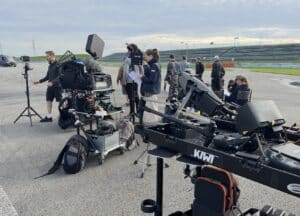
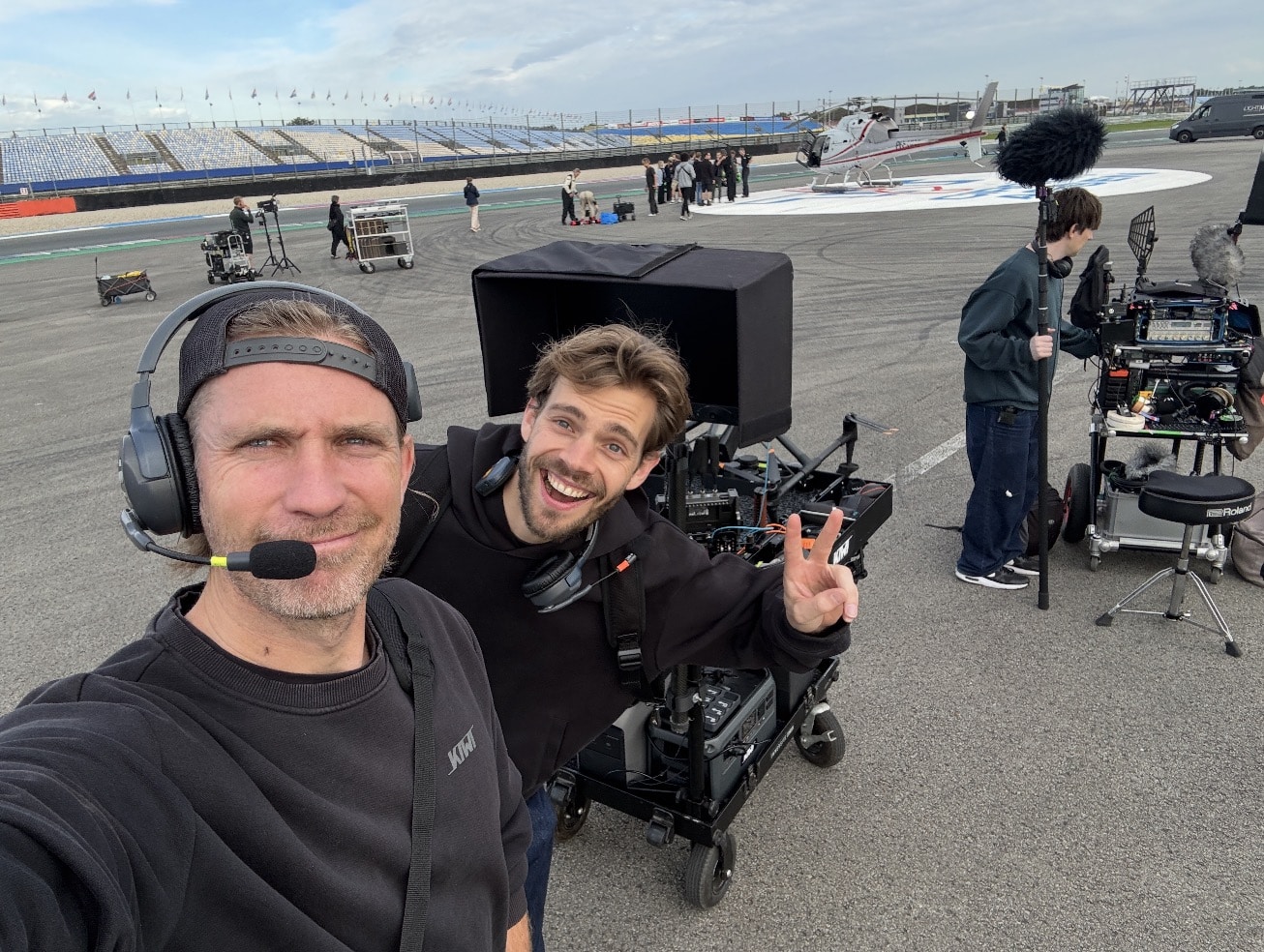
A drone on a film set has long been a fully integrated part of the camera department, with its own workflow, technical requirements and place in the on-set communication structure. On larger productions, our team operates as an independent drone department. Kiwi Aerial Shots has worked as a dedicated aerial partner on Dutch and international productions for 14 years. From Netflix series such as iHostage, Haantjes, Boomers and the upcoming thriller De Stilte, to international feature films including Afterburn (director JJ Perry, DOP José David Montero). In this article we explain how that collaboration works in practice: from the first briefing to the last shot on the shoot day.
PRE-PRODUCTION: HOW THE COLLABORATION STARTS
For TVC productions, we almost always receive a deck or written shot list from the agency or producer. This outlines the required drone shots, sometimes as a storyboard, sometimes as reference images. That gives us the space to think along from the pre-production phase: which drone, which camera, which flight lines are needed, and how much time we require per shot.
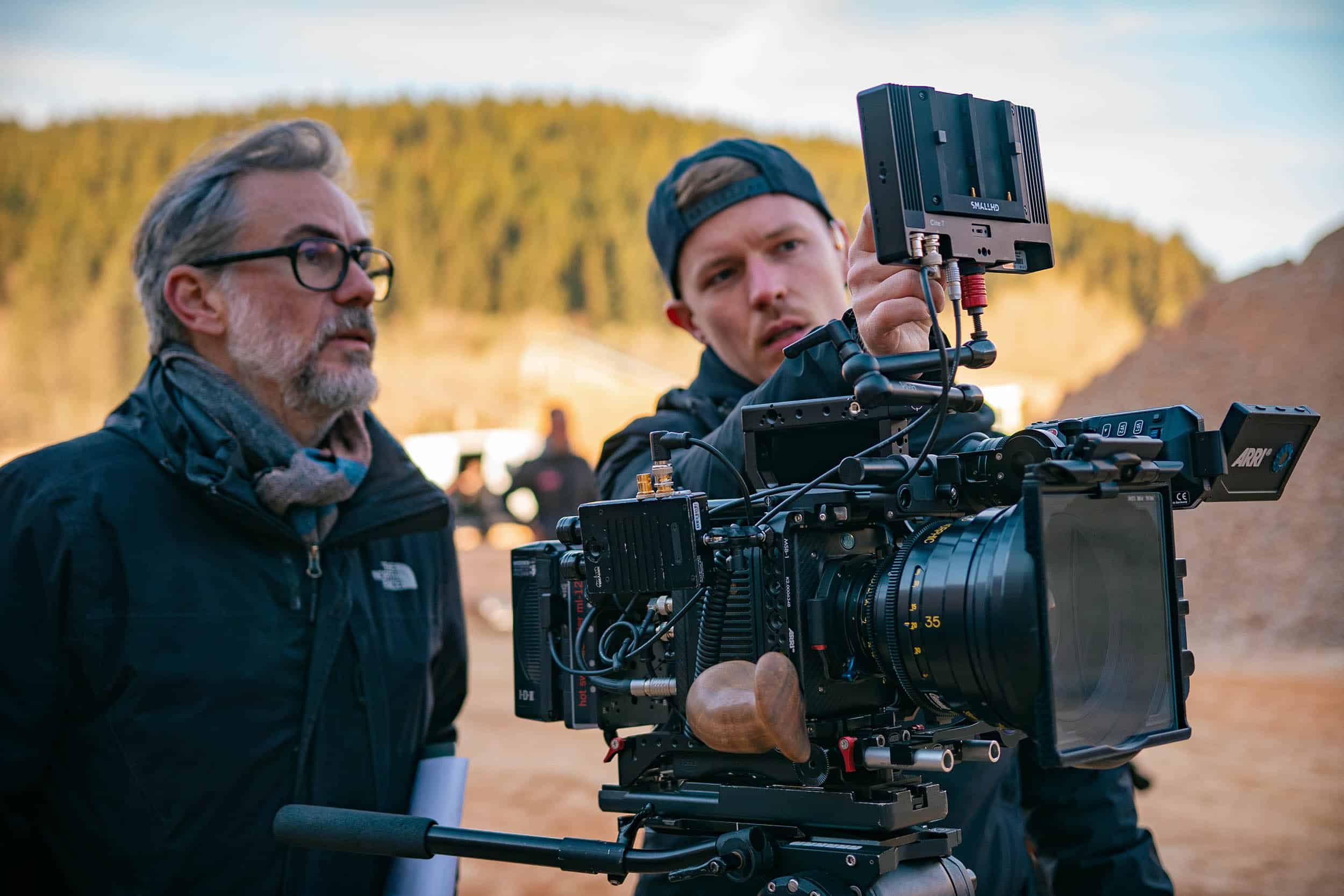
For feature films and television series the process is often different. We typically have several meetings with the DOP in advance to discuss the capabilities of our systems: which camera they want to fly, what the locations look like, and what the expectations are in terms of movement and speed. For complex locations, we carry out a technical recce. We assess obstacles, check signal strength for the drone and video feed, and map out which risk mitigations are required. The location manager or producer handles the practical arrangements based on our assessment.
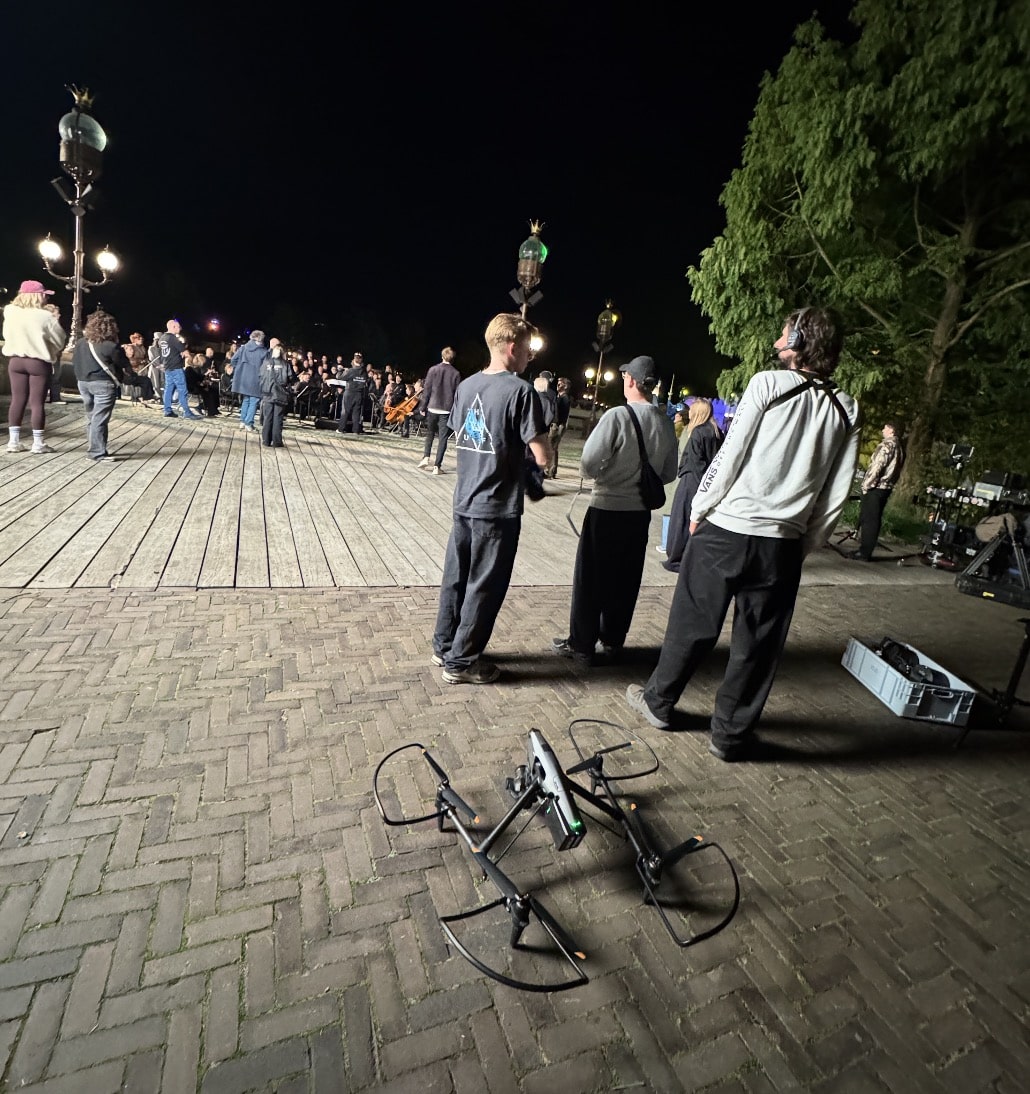
For iHostage, the Leidseplein in Amsterdam was closed off for a full night of shooting near the Apple Store. This made it possible to fly above a public space with actors on the ground, something for which our EASA Specific Category certification and approved AltMoC are essential. For international productions shooting across multiple European locations, we also coordinate the local flight permits and align aviation requirements per country, so the producer has nothing to worry about on that front.
FLIGHT TIME IS PRECIOUS: WHY THE 1ST AD IS OUR MOST IMPORTANT PARTNER ON SET
Something that often surprises productions: a professional cinema drone has an average flight time of ten to fifteen minutes per battery. Every minute in the air counts. That means by the time the drone goes up, everything else on set needs to be ready. Camera locked off, composition confirmed, actors on mark, lighting set. We take off and go straight for the shots. No room for last-minute adjustments on the ground.
The 1st AD is our most direct partner on set. They call the floor, manage timing and make sure everyone is ready at the right moment. For a drone team, that coordination is critical. We always discuss in advance how many takes we can cover per battery, how long a battery swap takes, and when best to schedule it without breaking the flow of the shoot.
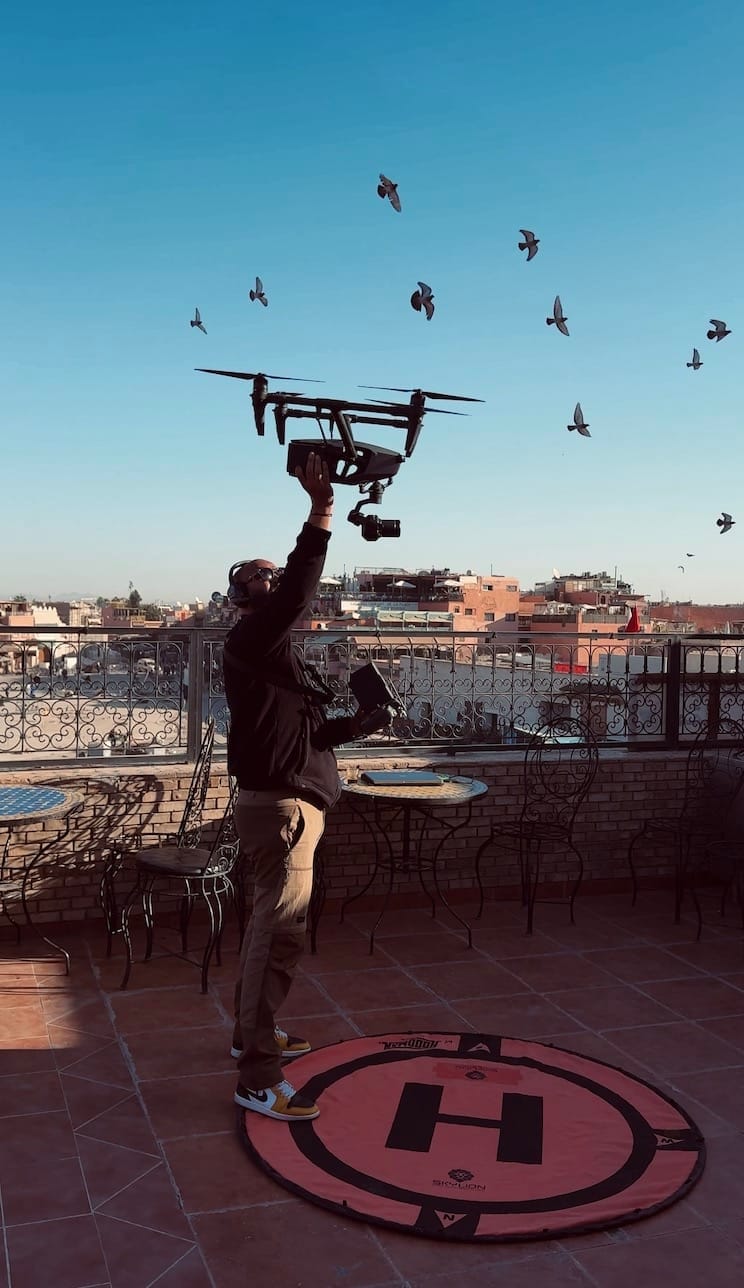
The same applies after the shot. After “cut”, everyone on a film set wants to move immediately to the next setup. For us, that is the moment we need to land the drone safely. A good 1st AD holds the set briefly until we call clear. On a busy location with crew, lights and equipment surrounding the landing zone, that is not a formality but a safety routine we discuss with every production before the shoot day.

TECHNICAL INTEGRATION ON SET: SIGNALS, POWER AND VIDEO VILLAGE
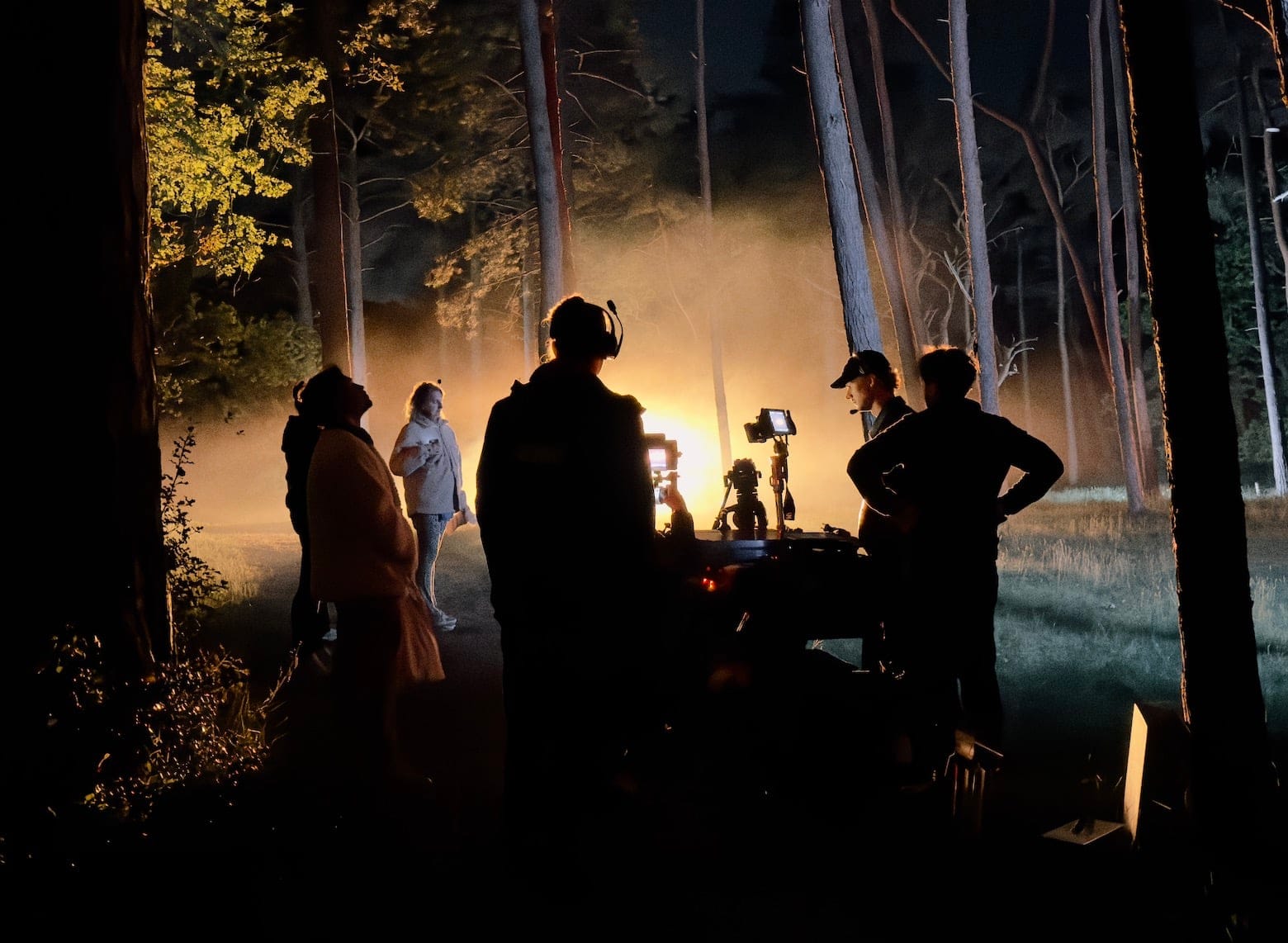
Before the first drone goes up, we align the technical setup with the camera department and the gaffer. Other wireless systems on set, such as wireless follow-focus, DJI Transmission or monitors, can cause interference with our drone feed. We map these out and adjust our frequencies where needed.
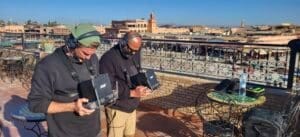
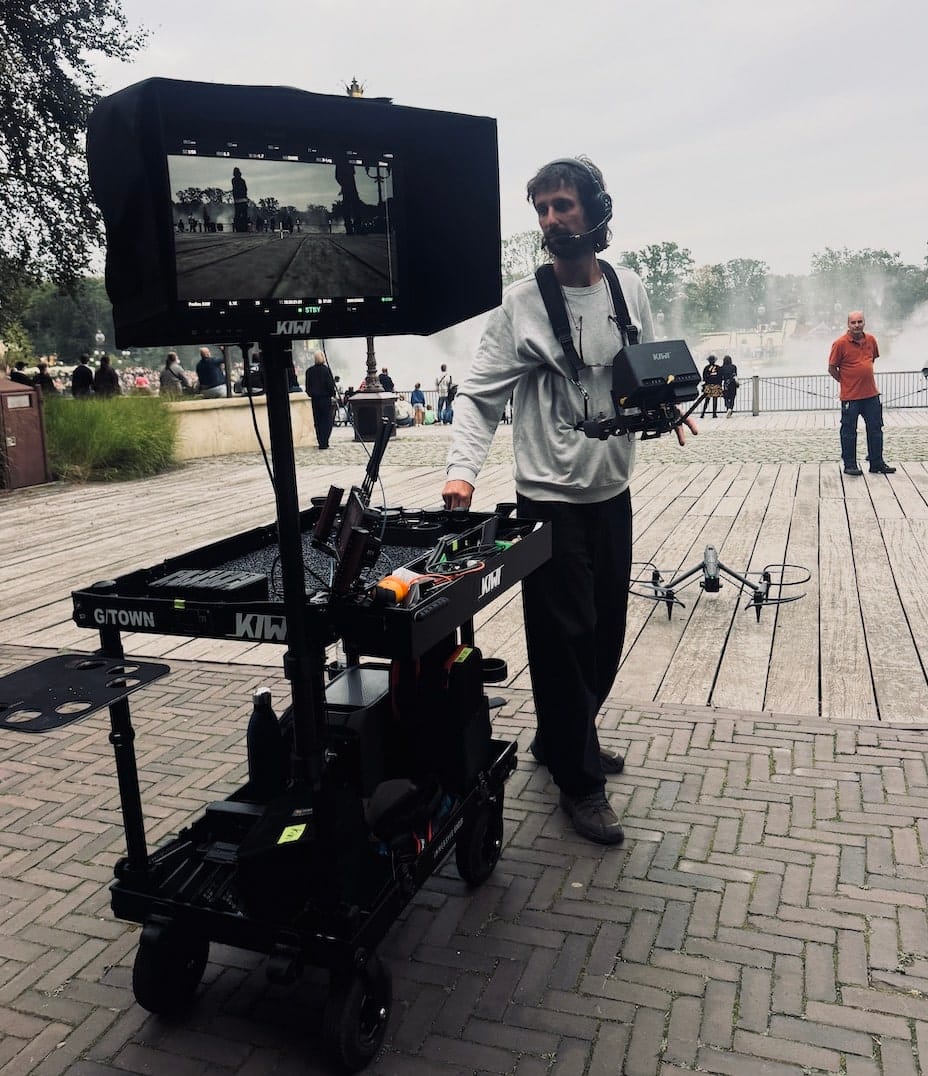
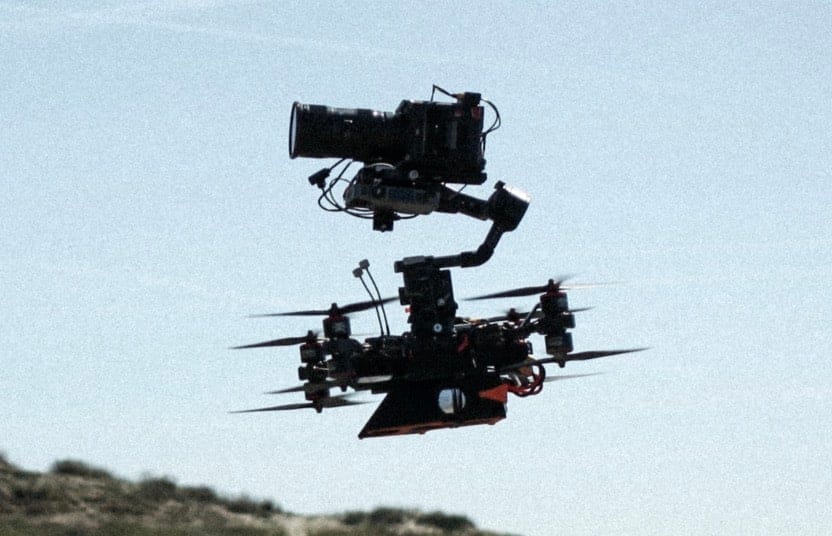
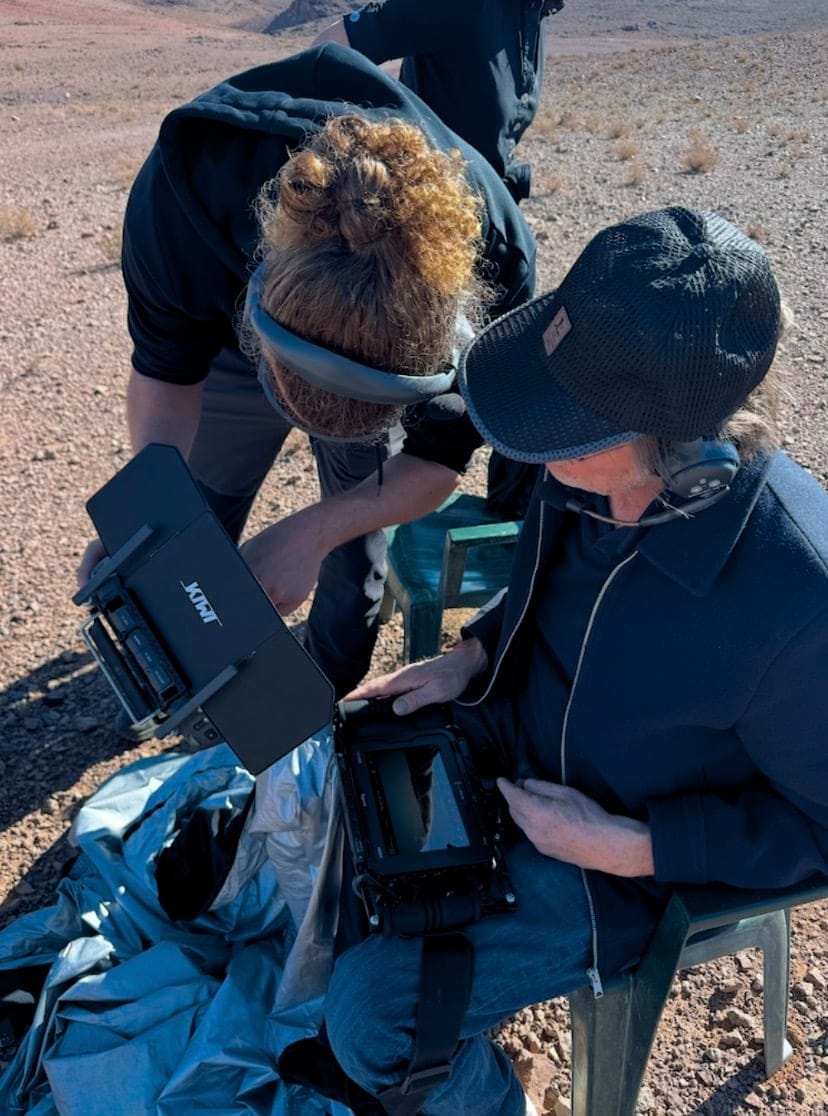
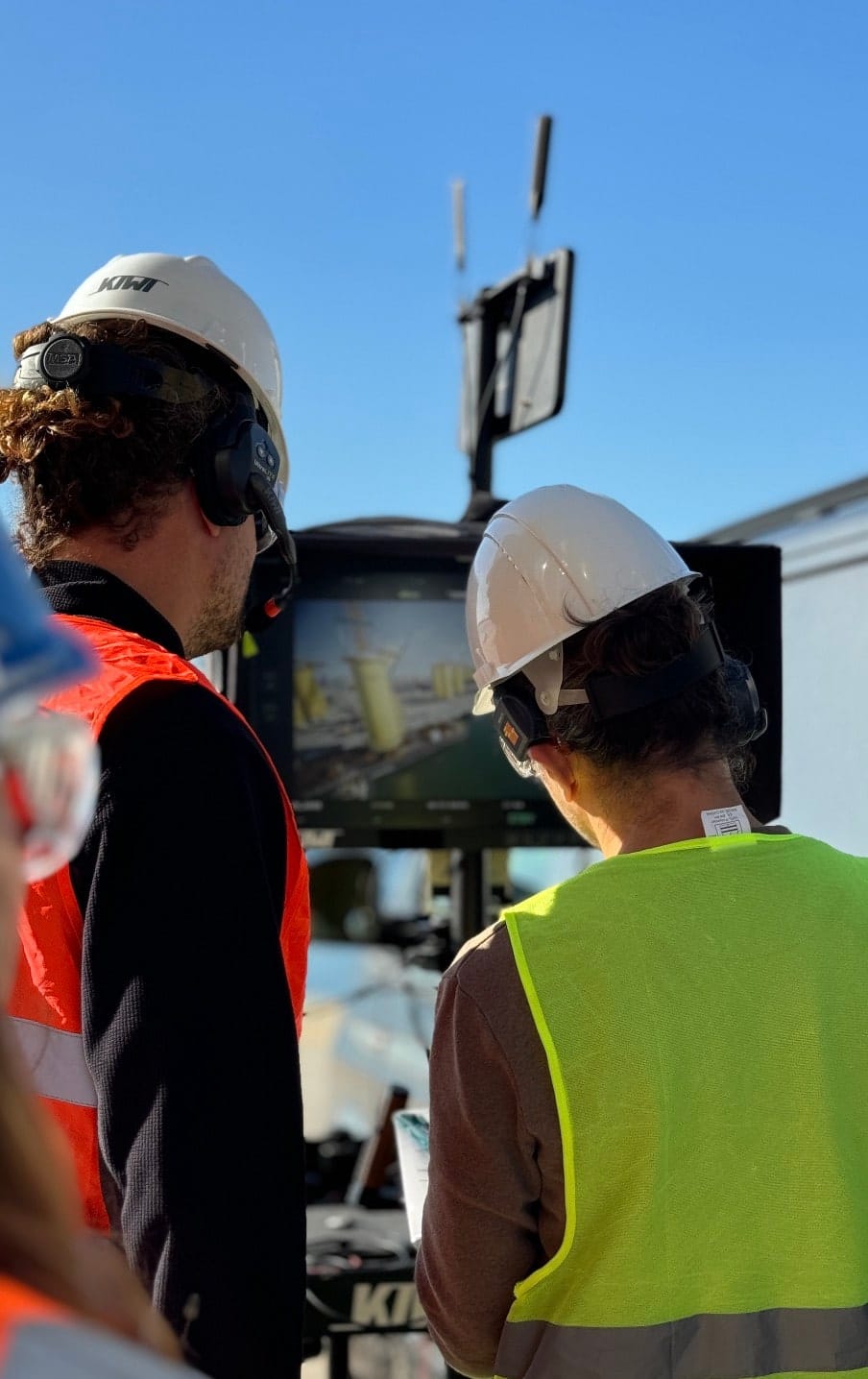
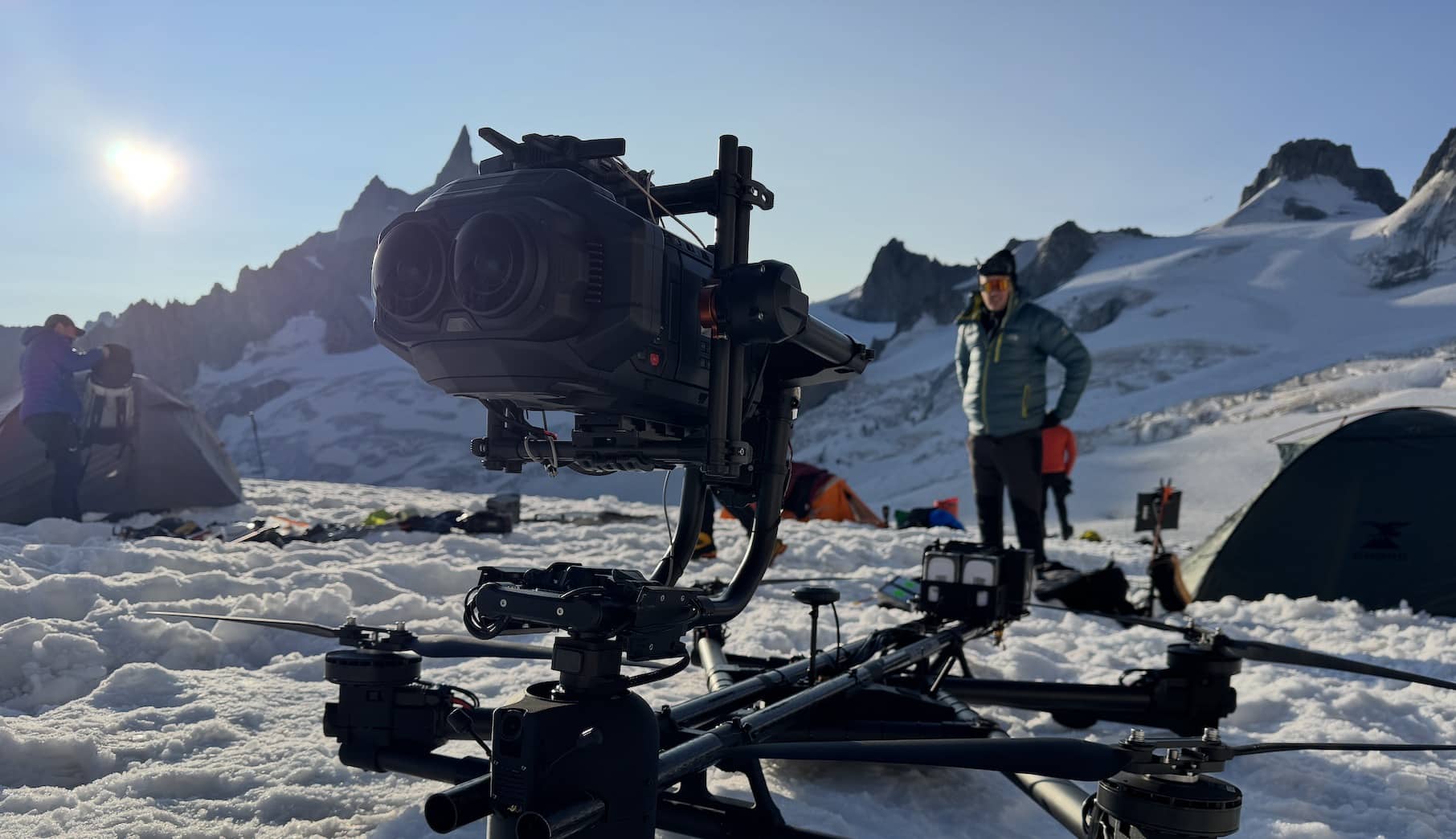
We also submit our power requirements to the production and discuss how the DOP or director monitors our feed live. On smaller drones via the low-latency feed from the pilot, on cinelifter setups via a dedicated DJI Transmission monitor showing a sharp image from the RED Komodo-X or Inspire 3. This keeps the video village fully integrated into our workflow, giving the DOP control over what the drone is capturing at all times.
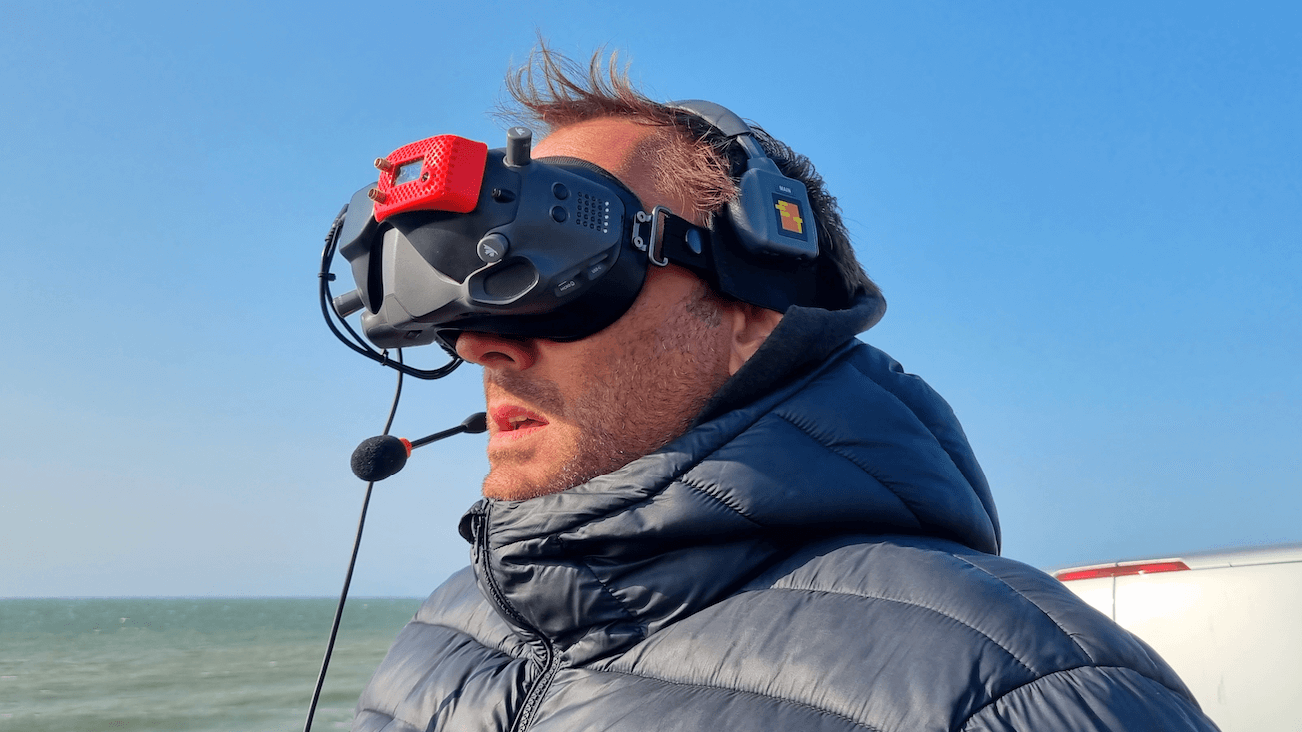
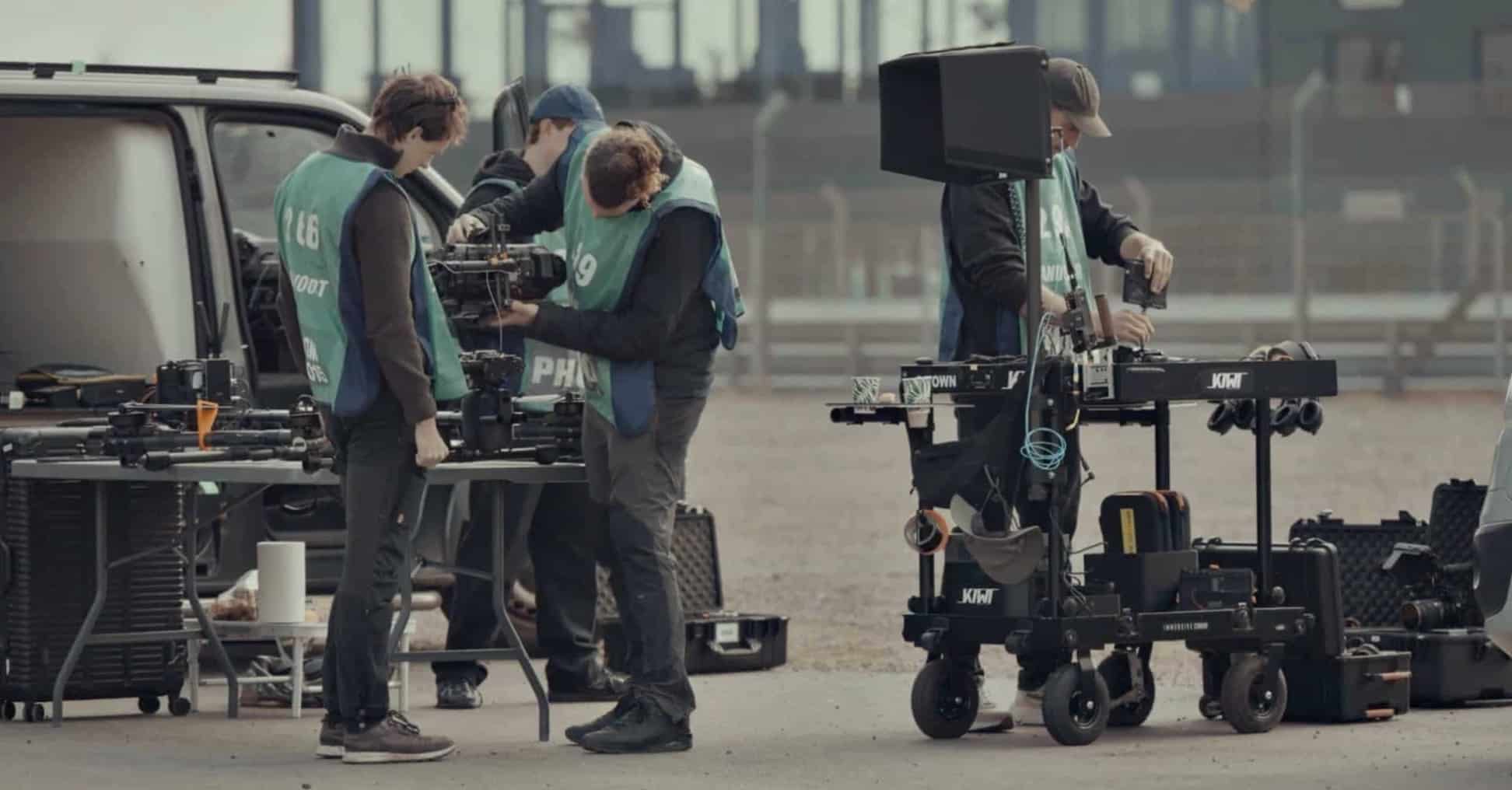
The size of our team depends on the risk mitigations the production requires. A standard setup consists of a drone operator and camera operator. On cinelifter and heavy-lift productions where frequent battery and lens changes are expected, we often add a technician or assistant, keeping the two lead operators free to communicate with the director and DOP without being pulled into logistics. On FPV shoots, there is always a dedicated spotter present, maintaining visual line of sight on the drone and assisting the FPV pilot.
MULTI-DAY PRODUCTIONS: WHY CONTINUITY MAKES THE DIFFERENCE
On a multi-day production the dynamic shifts fundamentally. You get to know the crew, understand how you work together and communication becomes more efficient. By day three, everything moves faster than on day one. That is exactly why multi-day productions run so much more smoothly for us as a dedicated drone department: the trust is already there, the workflow is established and no time is lost explaining the basics.
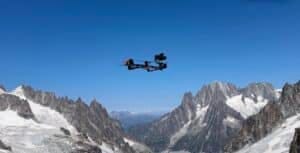
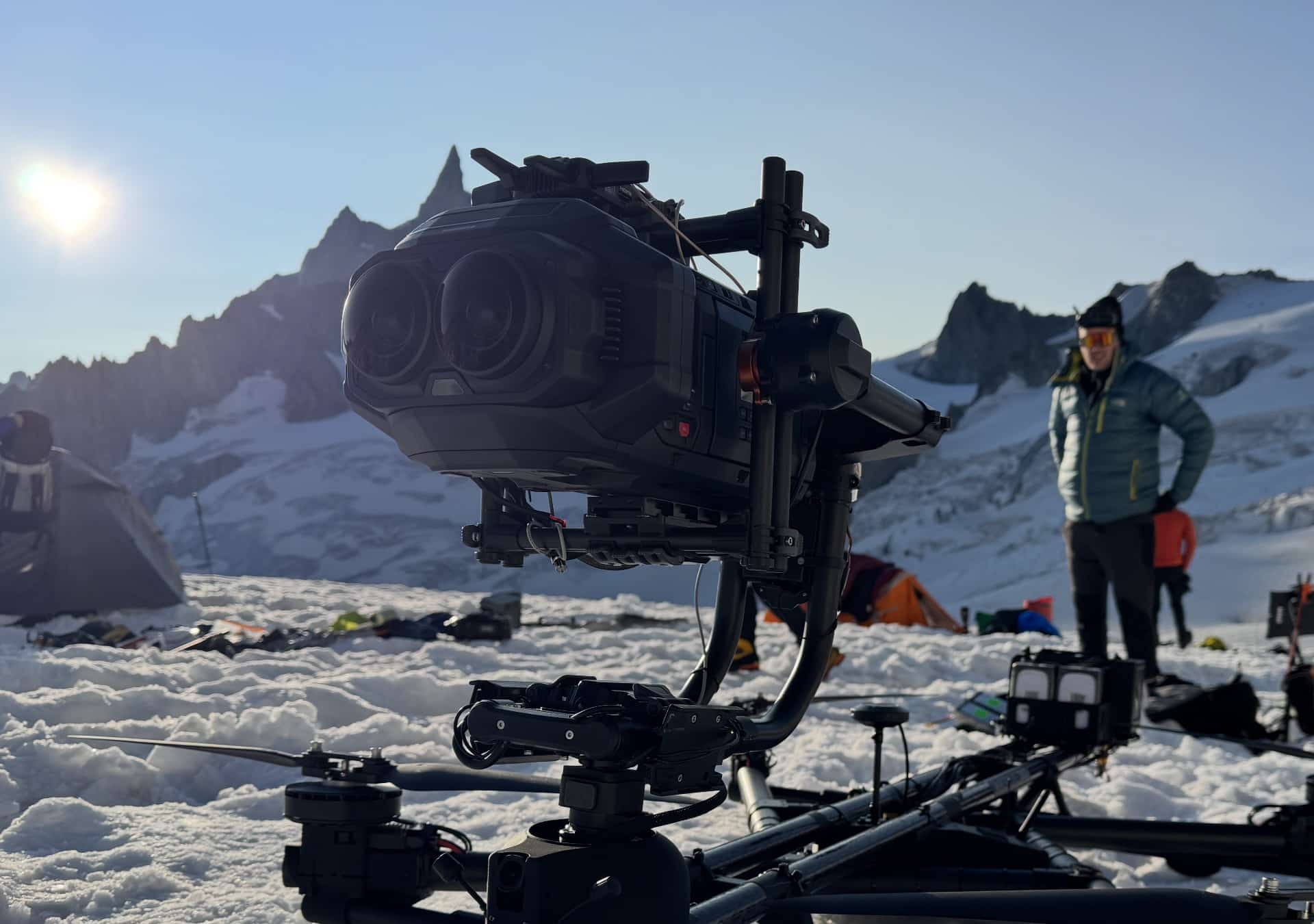
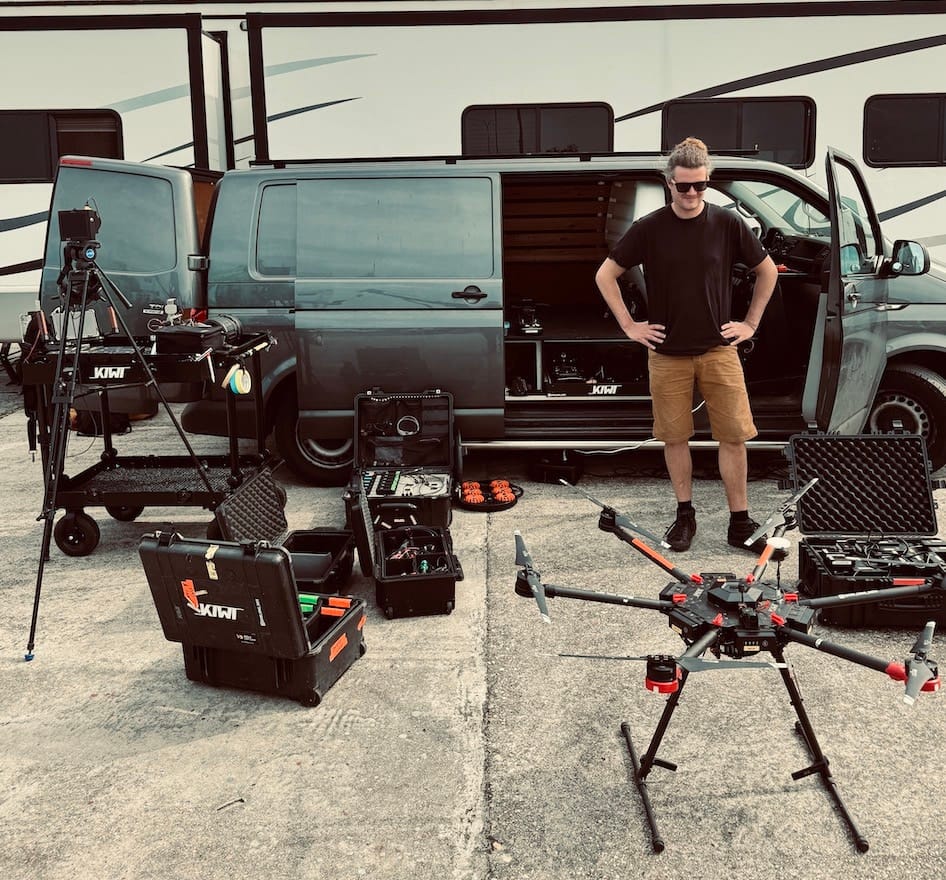
Another advantage of working with a single drone department is the breadth of our equipment. Because we own and operate all drone types in-house, from FPV drones and the Inspire 3 to heavy-lift cinema setups, immersive rigs and FPV cinelifters with a RED Komodo-X, we can switch systems quickly during a multi-day production when the shot list changes or new requirements come up. No additional suppliers, no new briefing.
For television series and feature films with shoot days spread across a longer period, Kiwi offers additional reliability as a larger drone company. We have multiple certified pilots and camera operators on staff. If half our team is working on another production, we can still deliver the same quality and the same workflow. That makes us a dependable aerial partner on projects where continuity is non-negotiable.
We see this reflected in long-running collaborations with Dutch DOPs including Coen Stroeve, Stefan Jansen, Richard Spierings and Ezra Reverda. The knowledge we build together, about each other’s working methods, about locations, about what works in the edit, pays off on every shoot day that follows.
WHEN DO YOU CHOOSE KIWI AS YOUR DEDICATED AERIAL PARTNER?
When productions need a drone department that handles aerial work from start to finish, Kiwi is the right partner. Our team consists of experienced producers, pilots, camera operators and technicians who are used to the demands of professional film sets. We have 14 years of experience on television series, feature films and commercials with complex shot lists, where aerial footage needs to cut seamlessly with the ground unit material.
We regularly work on international projects at challenging locations that require specialist certification or local flight permits. We think along from the first meeting and arrive on set as a fully independent drone department, integrated into your production workflow. Get in touch for an introduction or a quote.